|
11.4 Christian Marriage
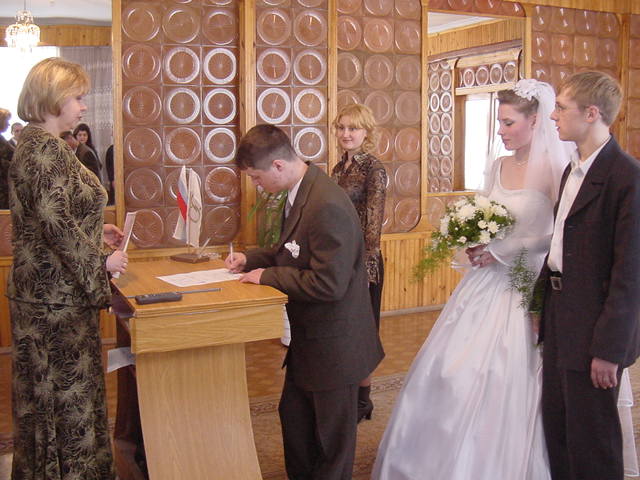 We will begin this section by considering the position of those who are single at the point of baptism. We have discussed in Study 5.3 the need to marry only baptised believers. There are a few passages which encourage those who are single at least to consider the option of remaining single so as to commit themselves totally to the Lord’s work (1 Cor. 7:7-9,32-38 cf. 2 Tim. 2:4; Mt. 19:11,12,29; Ecc. 9:9). “But even if you do marry, you have not sinned” (1 Cor. 7:28). Most, if not all, of the apostles were married (1 Cor. 9:5), and marriage as God intended is designed to bring many physical and spiritual benefits. “Marriage should be honoured by all, and the marriage bed kept pure” (Heb. 13:4 NIV). “It is not good that ... man should be alone”, unless he can manage a high level of commitment to spiritual things, and therefore God instituted marriage (Gen. 2:18-24). Therefore, “He who finds a wife finds a good thing, and obtains favour from the Lord ... a prudent wife is from the Lord”. (Prov. 18:22; 19:14) We will begin this section by considering the position of those who are single at the point of baptism. We have discussed in Study 5.3 the need to marry only baptised believers. There are a few passages which encourage those who are single at least to consider the option of remaining single so as to commit themselves totally to the Lord’s work (1 Cor. 7:7-9,32-38 cf. 2 Tim. 2:4; Mt. 19:11,12,29; Ecc. 9:9). “But even if you do marry, you have not sinned” (1 Cor. 7:28). Most, if not all, of the apostles were married (1 Cor. 9:5), and marriage as God intended is designed to bring many physical and spiritual benefits. “Marriage should be honoured by all, and the marriage bed kept pure” (Heb. 13:4 NIV). “It is not good that ... man should be alone”, unless he can manage a high level of commitment to spiritual things, and therefore God instituted marriage (Gen. 2:18-24). Therefore, “He who finds a wife finds a good thing, and obtains favour from the Lord ... a prudent wife is from the Lord”. (Prov. 18:22; 19:14)
We are given a balanced summary of the position in 1 Cor. 7:1,2 NIV: “It is good for a man not to marry. But since there is so much immorality, each man should have his own wife, and each woman her own husband” (cf. v 9).
The implication of these verses is that indulgence of sexual desires outside marriage is fornication. Warnings against immorality are frequent throughout the New Testament; almost every letter contains them. The following are but some of these: Acts 15:20; Rom. 1:29; 1 Cor. 6:9-18; 10:8; 2 Cor. 12:21; Gal. 5:19; Eph. 5:3; Col. 3:5; 1 Thes. 4:3; Jude 7; 1 Pet. 4:3; Rev. 2:21.
In the light of all this repeated emphasis, to fly in the face of God’s clearly expressed will is serious indeed. Paul frequently spelt this out: “... sexual immorality, impurity and debauchery ... and the like. I warn you, as I did before, that those who live like this will not inherit the Kingdom of God” (Gal. 5:19,21 NIV), therefore “Flee from sexual immorality (cf. 2 Tim. 2:22). All other sins that a man commits are outside his body, but he who sins sexually sins against his own body” (1 Cor. 6:18 NIV).
Biblically, marriage is comprised of at least three elements.
1. Some form of marriage ceremony, however simple. The record of Boaz marrying Ruth in Ruth 3:9-4:13 shows that marriage is not a relationship which is just drifted into; there must be a specific moment when one becomes fully married. Christ is likened to the bridegroom and the believers to the bride, whom he will ‘marry’ at his second coming. There will be “the marriage supper of the Lamb” to celebrate this (Rev. 19:7-9). The relationship between husband and wife typifies that between Christ and the believers (Eph. 5:25-30); as there will be a definite point of marriage between us, so there should be a wedding between believers which begins their marriage, typifying the union of Christ and ourselves at the judgment seat.
2. God’s marriage to Israel involved entering into a mutual spiritual covenant of faithfulness to each other (Ez. 16:8), and this should also feature in the marriage of believers.
3. Sexual intercourse is necessary to consummate the marriage (Dt. 21:13; Gen. 24:67; 29:21; 1 Kings 11:2). Because of this, 1 Cor. 6:15,16 explains why intercourse outside of marriage is so wrong. Intercourse signifies, in physical terms, how God has joined a wedded couple together (Gen. 2:24).
Those who are baptised, whilst their partner is not, should not leave them (1 Cor. 7:13-15), but rather make every effort to love them, and thus show by their manner of life that they have a genuine belief in the true God, rather than just having changed religions. 1 Pet. 3:1-6 encourages those in this position that doing this can, in itself, be a means of converting the unbelieving partner.
“A man (shall) leave his father and mother and be joined to his wife, and they shall become one flesh” (Gen. 2:24). This striving for unity between man and wife in as many ways as possible is analogous to our continuous effort for unity with Christ. This striving is against ourselves rather than against Christ or our partner. The more we succeed in this, the happier and more fulfilling our relationship will be.
However, we are living in a real world of sin and failure, of inability to rise up fully to the supreme standards of holiness which are set us in the Bible, and in the example of the love of God and of Christ.
Believers must be prepared to accept that sometimes this standard will not be attained both in their own lives and in those of other believers. Husbands and wives may argue and lose that unity of mind which they should have; it may be physically impossible to consummate the marriage; a man may have several wives, taken before his baptism, if living in a society where polygamy is allowed. In this case he should remain with the wives and care for them, but not take any more. The apostle Paul, in a masterful blend of human sympathy and staunch adherence to Divine principles, advised that separation was possible in extreme cases of incompatibility: “... a wife is not to depart from her husband. But even if she does depart, let her remain unmarried ...” (1 Cor. 7:10-11).
This stating of an ideal standard, but willingness to accept a lower standard as long as it does not flout a basic Divine principle (e.g. that adultery is wrong), is quite a common feature of Scripture. Paul’s advice in 1 Cor. 7:10-11 is akin to 1 Cor. 7:27,28: “... Are you loosed from a wife? Do not seek a wife (i.e. remain single). But even if you do marry, you have not sinned”. Christ’s words are painfully plain:
“But from the beginning of the creation, God made them male and female. ‘For this reason a man shall leave his father and mother and be joined to his wife, and the two shall become one flesh’, so then they are no longer two but one flesh. Therefore what God has joined together, let not man separate... whoever divorces his wife and marries another commits adultery against her. And if a woman divorces her husband and marries another, she commits adultery” (Mk. 10:6-12).
|

